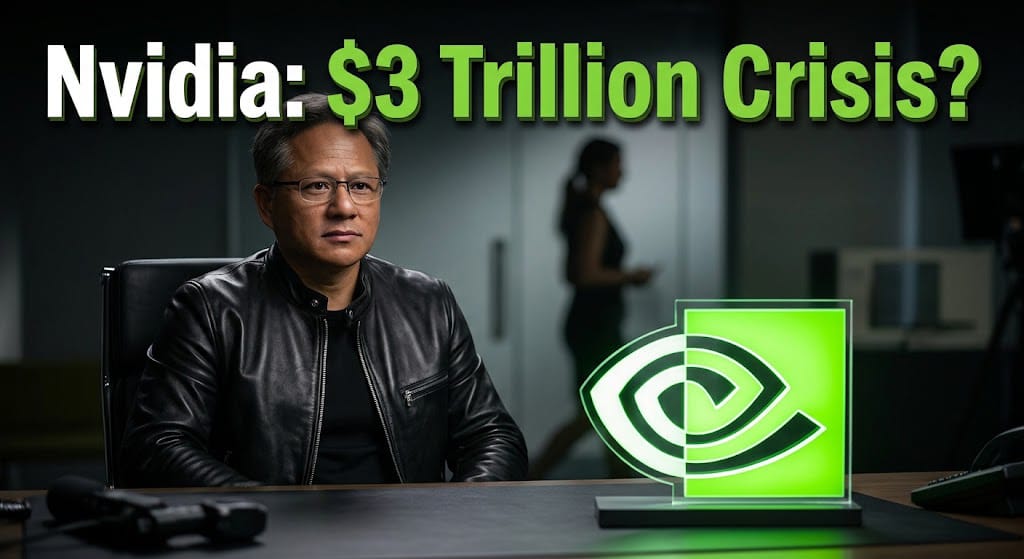
In Silicon Valley, charismatic founders are often treated less like corporate executives and more like untouchable visionaries. For the past several years, few leaders have enjoyed a pedestal quite as high as Jensen Huang. As the co-founder and CEO of Nvidia, Huang transformed a graphics chipmaker into the undisputed backbone of the artificial intelligence revolution, propelling the company to a multi-trillion-dollar valuation and turning himself into a leather-jacket-wearing icon of modern tech.
Yet, when a company’s identity and market valuation become so tightly woven into the persona of a single individual, any crack in that personal armor can send shockwaves across global financial markets.
Over the past week, fresh reports implicating Huang in a second workplace affair allegation have dominated headlines across major financial and technology outlets. While personal scandals involving high-profile executives are hardly new on Wall Street, the sheer scale of Nvidia’s market influence makes this situation uniquely volatile. With Nvidia’s stock taking a sharp hit in pre-market trading and questions swirling around the timing of the leaks, investors are left wondering: Is this simply a corporate governance crisis, or could it be the catalyst that finally pricks the massive AI valuation bubble?
What Are the New Allegations Against Jensen Huang?
According to recent media reports—including coverage from Axios, The National, and major broadcast networks—Nvidia’s board of directors is reportedly examining claims surrounding a second alleged personal relationship involving CEO Jensen Huang. Unlike typical rumor-mill gossip, these reports carry significant weight because they allegedly involve a senior executive who reported directly to Huang, with several outlets pointing toward Kimberly Powell, Nvidia’s Vice President of Healthcare.
Adding fuel to the fire are unverified claims circulating within financial circles regarding how the situation was handled behind closed doors. Rumors suggest that an employee allegedly captured audio recordings of certain interactions and was subsequently asked to sign a strict Non-Disclosure Agreement (NDA) in exchange for silence.
It is crucial to separate verified reporting from speculation here. While major news organizations have confirmed that affair allegations are being scrutinized and have rattled investor confidence, Nvidia has declined to comment publicly, and the specific claims regarding secret voice memos and hush-money NDAs remain officially unverified. Regardless of what is eventually proven, in financial markets, perception often moves faster than facts.
Why Now? The Suspicious Timing Behind the Leaks
Perhaps the most intriguing aspect of this developing story isn’t just what happened, but when it became public knowledge. Wall Street analysts, tech insiders, and market commentators are all asking the same question: Why are these details surfacing at this exact moment?
Reports indicate that this situation is far from brand new. In fact, whispers suggest that high-level political figures—including Donald Trump and U.S. intelligence circles—may have been aware of the alleged affair for nearly a year. Furthermore, insiders claim that Huang had previously retained a specialized crisis public relations firm—the kind of high-powered agency hired specifically to bury negative headlines, manage reputational fallout, and keep institutional investors calm.
If this information was contained for roughly 365 days, what changed? There are two prevailing theories currently circulating among market watchers:
A Breakdown in Damage Control: Corporate crises often stay hidden only until a key party decides the terms of silence are no longer worth keeping, or until board-level internal politics force a disclosure. Once a narrative slips past a crisis PR firm’s grasp, media outlets race to publish, creating an avalanche effect.
Strategic Market Pressure: A more cynical theory suggests that powerful market players or short-sellers may be leveraging the timing of these leaks to apply maximum downward pressure on Nvidia’s stock. When a company is priced for absolute perfection, even a hint of leadership instability can trigger massive sell-offs.
Neither theory has been proven, and there is no concrete evidence linking the media leaks to coordinated market manipulation. Still, on Wall Street, coincidence is rarely taken at face value.
Market Reaction: A Pattern of Growing Volatility
To understand why investors reacted so nervously to the latest headlines, you have to look at Nvidia’s recent trading history. Over the past few months, Nvidia’s stock has experienced an unusual series of sharp jolts, erasing hundreds of billions—and cumulatively nearly $1 trillion—in market value during peak sell-offs before staging partial recoveries.
Consider the timeline of recent shocks to NVDA shares:
The First Affair Report: When initial rumors of a personal scandal first surfaced earlier, Nvidia’s stock tumbled roughly 10%, catching retail and institutional investors off guard.
Post-Election Jitters: Following the Democratic victories in the November elections, shifting regulatory expectations and tech policy concerns triggered another steep 12% drop in the stock.
The Second Allegation: Immediately after the latest reports broke, Nvidia shares dropped another 8% in pre-market trading, signaling deep unease among global investors before the opening bell even rang.
While Nvidia has historically shown remarkable resilience—bouncing back on the strength of its earnings and relentless demand for its Blackwell and next-generation AI chips—each dip leaves the market a little more fragile. Investors are beginning to price in "key-man risk," the very real danger that Nvidia’s operational magic is heavily dependent on Huang remaining at the helm without distraction.
The Ripple Effect Across the Global Tech Supply Chain
Nvidia does not exist in a vacuum. Because the company sits at the very center of the artificial intelligence ecosystem, a sustained downturn in Nvidia’s stock rarely stays confined to one ticker symbol. If investor confidence in Nvidia erodes further, the shockwaves will inevitably hit the broader semiconductor and big tech sectors.
Here is how a prolonged Nvidia slump could impact other industry giants:
Memory and Chip Suppliers: Companies like Samsung Electronics, SK Hynix, and Micron Technology have poured billions into manufacturing High Bandwidth Memory (HBM) specifically tailored for Nvidia’s AI accelerators. Any slowdown in Nvidia’s momentum or capital expenditure forecasts directly threatens their revenue pipelines.
Hyperscalers and Cloud Giants: Tech titans such as Microsoft and Meta have spent tens of billions of dollars building out massive AI data centers powered by Nvidia hardware. These companies have justified their staggering capital expenditures to shareholders on the promise that AI infrastructure is an unstoppable growth engine. If Nvidia falters, Wall Street will immediately question whether Microsoft, Meta, and their peers have overinvested in AI hardware.
In short, Nvidia has become the barometer for the entire tech market. When it catches a cold, the rest of Silicon Valley starts sneezing.
High Stakes for Upcoming AI IPOs: Anthropic and OpenAI
Beyond publicly traded tech giants, the timing of this controversy couldn't be worse for the private AI market. The entire venture capital and investment banking world is currently gearing up for a historic wave of artificial intelligence public offerings—most notably Anthropic, the creator of the Claude AI models, which is scheduled to go public in just a matter of days.
Anthropic’s IPO is widely viewed as the ultimate litmus test for public market appetite regarding pure-play AI companies. Institutional investors are already debating whether generative AI startups can generate enough sustainable profit to justify their astronomical valuations.
If Nvidia’s stock suffers a major correction right as Anthropic hits the public market, sentiment could sour overnight. A lukewarm or disappointing debut for Anthropic wouldn't just be bad news for its early backers—it would cast a long shadow over OpenAI’s anticipated IPO down the road. Investment bankers rely on bullish momentum to price massive tech listings; leadership drama at the world's most important AI chipmaker introduces friction at the exact moment the industry needs smooth sailing.
Corporate Governance and the "Founder Immunity" Problem
Stepping back from stock charts and IPO timelines, the situation surrounding Jensen Huang highlights a recurring problem in modern corporate governance. When a CEO delivers historic returns, boards of directors often become reluctant to enforce strict oversight. Whether in tech, finance, or media, towering founders are frequently granted an unspoken immunity—until a scandal grows too large to ignore.
For Nvidia’s board, the path forward requires delicate balancing. On one hand, ousting or sidelining Jensen Huang would likely trigger a catastrophic loss of confidence among engineers, partners, and shareholders alike. On the other hand, sweeping serious workplace allegations under the rug—especially if NDAs were used to shield executive behavior—invites regulatory scrutiny, shareholder lawsuits, and long-term reputational decay.
Modern institutional investors, particularly large pension funds and asset managers, hold strict Environmental, Social, and Governance (ESG) mandates. Even if Nvidia’s quarterly revenue continues to break records, governance failures can force major funds to trim their positions, creating a steady ceiling on the stock's upside.
Is the AI Bubble Actually Popping?
Every few months, skeptics declare that the AI boom has reached its peak and is on the verge of a dot-com-style collapse. Until now, those predictions have been crushed by hard numbers: soaring data center revenues, insatiable demand for compute power, and rapid enterprise adoption.
However, financial bubbles rarely burst because the underlying technology stops working; they burst when investor psychology shifts from greed to fear.
The allegations against Jensen Huang alone are unlikely to derail the long-term trajectory of artificial intelligence. Companies will still need GPUs, cloud providers will still train larger models, and enterprise software will continue to evolve. Yet, in a market stretched to historic valuation multiples, external shocks matter. Combined with post-election policy uncertainty and nervousness ahead of major AI IPOs, this controversy serves as a stark reminder that even the mightiest tech empires are built on human leadership—and human fallibility.
Final Thoughts
For now, the market remains in a state of watchful tension. No direct link has been established between the allegations against Jensen Huang and deliberate stock manipulation, and key details regarding internal recordings or NDAs remain unproven. Still, the convergence of executive scrutiny, pre-market volatility, and looming multi-billion-dollar IPOs has created a high-stakes environment that investors cannot afford to ignore.
Whether Nvidia quickly absorbs this blow and marches back toward record highs—or whether this marks the beginning of a broader reassessment of AI valuations—will depend heavily on transparency from Nvidia’s board and how Wall Street digests the days ahead. One thing is certain: the spotlight on Jensen Huang has never been brighter, and for once, it isn’t because of a new microchip.